A worked example · Chapter 2
When Linda’s condition changes
One patient, followed through one change. Read her situation at 0800, see what is different by 1400, try the five questions yourself, then compare your thinking with the book’s.
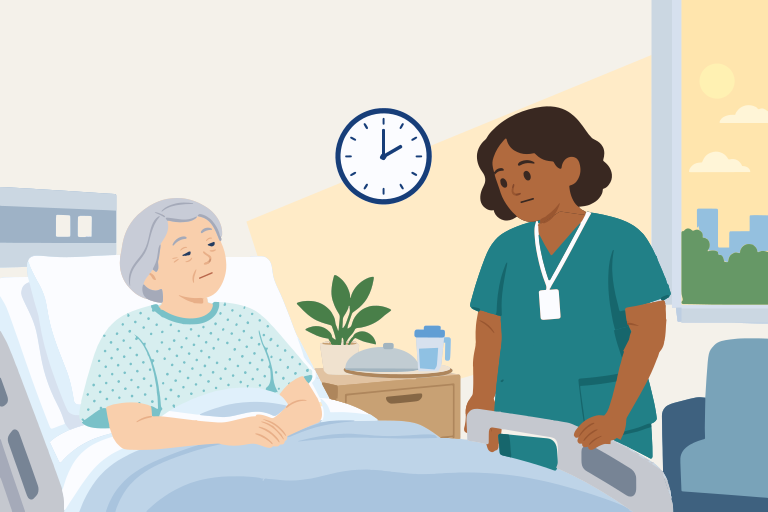
01 · 0800
Meet Linda at 0800
Linda · 0800
Reports feeling tired and “a little weak”
Initial assessment (0800)
- Alert and oriented × 4
- Reports feeling tired and “a little weak”
- Burning with urination and increased frequency
- Mild lower abdominal discomfort
- Skin warm and dry
- Lungs clear bilaterally; no shortness of breath
- Ambulates with a steady gait
Initial laboratory results
- WBC 11.8 × 10³/µL (elevated)
- Urinalysis positive for leukocytes and nitrites
- Creatinine 0.9 mg/dL
- Blood glucose 142 mg/dL (slightly elevated)
02 · 1400
By 1400, the situation changes
Several hours later, there are changes in Linda’s condition. Compare the new information with her situation at 0800.
Linda · 1400
“I just don’t feel like eating.”
- fever
- slower to respond
08001400
- Mental status
- 1400Oriented to person and place; slower to respond
0800 Alert and oriented × 4
- Temperature
- 1400100.8 °F (38.2 °C)
0800 99.0 °F (37.2 °C)
- Blood pressure
- 1400104/62 mm Hg
0800 128/76 mm Hg
- Heart rate
- 1400102 beats/min
0800 84 beats/min
- Respiratory rate
- 140020 breaths/min
0800 16 breaths/min
- Oxygen saturation
- 140095% on room air
0800 97% on room air
- Pain (lower abdomen)
- 14006/10
0800 3/10
- WBC
- 140014.6 × 10³/µL
0800 11.8 × 10³/µL
- Creatinine
- 14001.1 mg/dL
0800 0.9 mg/dL
- Blood glucose
- 1400168 mg/dL
0800 142 mg/dL
New assessment findings (1400)
- More tired and less engaged in conversation
- Reports increased lower abdominal pain
- Continues to have urinary frequency and burning
- Decreased oral intake since morning (“I just don’t feel like eating.”)
- Skin feels warm to touch
- Lungs remain clear bilaterally
- Ambulates with assistance due to increased weakness
- Urinalysis still positive for leukocytes and nitrites
Your turn: reassess using GUARD
Answer each question for Linda before you open the book’s answer.
03 · Goal

Goal
Nurse
Has the goal for this patient changed? If so, how?
- What is the goal now, based on the new information?
- Do priorities need to change?
Show the book’s answer
- Treat the urinary tract infection and prevent progression to systemic infection (sepsis).
- Stabilize vital signs.
- Relieve symptoms (pain, urinary frequency, burning).
- Maintain adequate hydration and oxygenation.
- Monitor for and address changes in mental status.
Why it matters: The goal now includes preventing further deterioration, because of new signs such as fever, a faster heart rate and a change in mental status.
04 · Unsafe Outcomes

Unsafe Outcomes
Nurse
What new or different unsafe outcomes are concerning now?
- What is most concerning about these changes?
- What could happen if this continues?
- What do we want to prevent?
Show the book’s answer
- Progression to sepsis or septic shock
- Worsening infection (for example, pyelonephritis)
- Further decline in mental status (confusion, delirium)
- Dehydration
- Impaired oxygenation or respiratory compromise
- Falls related to weakness or confusion
- Unstable blood glucose
Why it matters: New fever, a faster heart rate, lower blood pressure and a change in mental status indicate a higher risk of systemic infection and decline. Older adults with diabetes are at greater risk of complications and rapid change.
05 · Affecting Factors

Affecting Factors
Nurse
Which affecting factors are still important? Are there new ones?
- What about these new findings affects your thinking?
- Has anything changed with her condition, medications or status?
Show the book’s answer
- Age 72: increased risk of rapid deterioration
- Type 2 diabetes: increased infection risk; may affect healing and blood glucose
- Hypertension
- Increased weakness, change in mental status, fever and decreased oral intake
- Home medications (an ACE inhibitor, metformin, a statin)
- Lives at home with her spouse: assess available support
Why it matters: Diabetes can affect the immune response and increase the risk of sepsis. Decreased oral intake increases the risk of dehydration and kidney involvement.
06 · Results

Results
Nurse
Which new results or findings are most important?
- Which changes are significant?
- What trends do you see?
- What tells you the patient is getting worse?
Show the book’s answer
- Temperature 100.8 °F (from 99.0 °F)
- Blood pressure 104/62 mm Hg (from 128/76)
- Heart rate 102 beats/min (from 84)
- Respiratory rate 20 breaths/min (from 16)
- Oxygen saturation 95% on room air (from 97%)
- WBC 14.6 × 10³/µL (from 11.8)
- Oriented to person and place only, and slower to respond
Why it matters: Fever, a faster heart rate and a rising WBC suggest the infection may be progressing. Lower blood pressure and a faster respiratory rate suggest possible systemic involvement. A change in orientation is a concerning change in an older adult. The trend shows she is getting worse.
07 · Do or Don't

Do or Don't
Nurse
What should the nurse do or not do now, based on this new information?
- What are the priority nursing actions now?
- What should be reported or escalated?
- What should be avoided?
Show the book’s answer
- Notify the provider of the change in condition (fever, lower blood pressure, faster heart rate, change in mental status, rising WBC).
- Monitor vital signs and neurological status more frequently.
- Give prescribed antibiotics as ordered and evaluate the response.
- Encourage and monitor fluid intake; consider IV fluids if ordered.
- Monitor blood glucose per protocol.
- Use safety measures such as fall precautions.
- Don’t dismiss a change in mental status, a fever or declining vital signs.
- Don’t delay reporting significant changes.
Why it matters: Linda now needs more frequent monitoring and possible escalation of care. Early intervention can help prevent further deterioration.
Pause and reflect
- What changed in Linda’s condition?
- How did the new information change your GUARD thinking?
- What additional information would be helpful right now?
As the patient’s condition changes, the information within each part of GUARD changes too. The same five questions help organize new information, recognize growing risks, and guide next steps.